
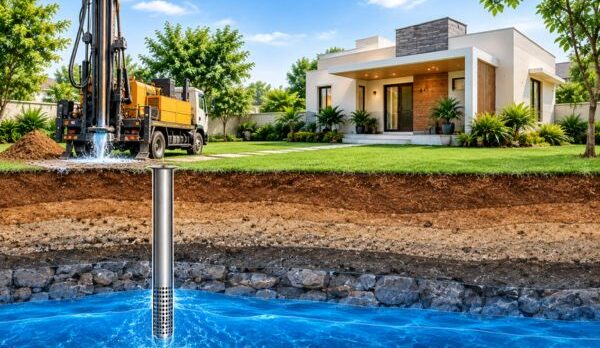
How to Choose the Right Borewell Location for a Residential Property
Choosing the correct location for a borewell is one of the most important decisions when planning a reliable water source for a home, bungalow, apartment, or housing society. A borewell drilled at an unsuitable point may provide low water yield, create maintenance problems, or require additional drilling work later.
For homeowners considering Residential Borewell Services in Ahmedabad, proper site selection should be based on groundwater conditions, available space, property layout, drainage, accessibility, and future maintenance requirements. A planned approach can help improve the chances of developing a practical and long-lasting groundwater source.
Understand the Groundwater Conditions First
Groundwater is not available uniformly below every property. The depth, movement, and storage of underground water can vary depending on soil conditions, rock formations, fractures, seasonal rainfall, and nearby groundwater extraction.
Before selecting the final drilling point, it is helpful to understand the local geological conditions. A professional groundwater or hydrogeological assessment can provide useful information about possible water-bearing formations.
This is especially important in urban and developing areas of Ahmedabad where groundwater conditions may differ considerably between locations.
Consider a Hydrogeological Survey Before Drilling
Choosing a borewell point only because the area is open or convenient may not always give the desired result.
A hydrogeological survey studies factors such as:
- Geological formations
- Groundwater movement
- Rock fractures
- Surface drainage
- Existing wells in the surrounding area
- Terrain and site conditions
The findings can help identify a more suitable zone for borewell drilling.
However, homeowners should understand that groundwater surveys improve planning and reduce uncertainty but cannot guarantee a specific amount of water.
Maintain Distance From Contamination Sources
Water quality is just as important as water availability.
A residential borewell should be positioned away from possible contamination sources such as septic tanks, sewage lines, waste disposal areas, drainage channels, chemical storage, and stagnant wastewater.
Poor placement may increase the risk of contaminants entering the groundwater system.
Before drilling, check the property’s sewage and drainage layout carefully. The borewell location should be planned so that clean groundwater extraction and wastewater systems remain properly separated.
Check Accessibility for the Drilling Machine
Borewell drilling equipment requires adequate access to the selected location.
A technically suitable groundwater point may still be difficult to use if the drilling rig cannot reach it.
Before finalising the location, check:
- Entrance width
- Overhead electrical cables
- Trees and branches
- Compound walls
- Parking areas
- Building projections
- Underground utility lines
- Space for drilling equipment
For existing residential properties, accessibility can become a major factor because construction around the property may already be complete.
Professional Residential Borewell Services should therefore evaluate both groundwater suitability and practical drilling access.
Keep the Borewell Convenient for Pump Installation
The borewell location should also support easy installation of the submersible pump, electrical connections, piping, control panels, and water storage systems.
A point located far away from the building may require longer pipelines and electrical cables.
On the other hand, drilling extremely close to the building foundation may create unnecessary construction and maintenance difficulties.
The best location normally balances groundwater potential with practical connection to the property’s water system.
Think About Future Maintenance
A borewell is not a one-time installation. It may require inspection, pump servicing, flushing, cleaning, pipe replacement, or camera inspection in the future.
Avoid selecting a location that may later become permanently covered by:
- Concrete flooring
- Building extensions
- Parking structures
- Landscaping
- Storage areas
Keeping the borewell head accessible can make future maintenance easier and reduce unnecessary civil work.
Consider the Property Type
The right location can vary depending on how the residential property uses water.
Independent Homes and Bungalows
For individual homes, the borewell can often be located within the garden, setback, side passage, or another accessible open area.
Apartments and Housing Societies
Apartment buildings may have higher water requirements. The borewell location should therefore consider water demand, common-area access, pump installation, storage tanks, and maintenance requirements.
New Residential Construction
For new projects, planning the borewell before major construction begins can provide more flexibility for drilling equipment and pipeline placement.
Avoid Choosing a Location Based Only on Nearby Borewells
Homeowners sometimes select a drilling point because a neighbour has a successful borewell nearby.
Although nearby borewells can provide useful background information, underground geological conditions can change even over relatively short distances.
The neighbour’s borewell depth and water yield should therefore be treated as reference information rather than a guarantee.
Site-specific assessment remains important.
Consider Rainwater Recharge Opportunities
Residential borewell planning can also be connected with groundwater recharge.
Rooftop rainwater can potentially be collected and directed toward an appropriately designed recharge system rather than being completely lost through stormwater drainage.
A properly planned rainwater harvesting or recharge system may support groundwater conservation and improve long-term water management at the property.
The recharge structure should be professionally designed so that contaminated surface water does not directly enter the borewell.
Why Professional Site Selection Matters
Professional borewell contractors consider much more than the physical space available for drilling.
The assessment may include groundwater conditions, drilling access, safety, drainage, nearby structures, pipeline requirements, pump installation, and future servicing.
For property owners searching for Residential Borewell Services in Ahmedabad, selecting the borewell location carefully before drilling can help reduce avoidable problems and support a more efficient water system.
Conclusion
Choosing the right borewell location for a residential property requires a balance between groundwater potential and practical site conditions. Homeowners should consider geological conditions, contamination risks, equipment access, building layout, pump installation, and future maintenance before deciding where to drill.
Professional planning can make the overall borewell project more organised and help property owners make informed decisions. Jaldhara Borewell provides residential borewell support in Ahmedabad for homes, apartments, bungalows, and housing societies, including site assessment, drilling, pump installation, testing, and related groundwater services.
Frequently Asked Questions
The location should be selected after considering groundwater conditions, drilling access, distance from contamination sources, property layout, pump installation, and future maintenance requirements.
A survey is not always mandatory, but it can provide useful information about local geological conditions and help identify a more suitable area for drilling.
It may be possible depending on the property layout, foundation, access, utilities, and local site conditions. The location should be evaluated before drilling.
The borewell should be kept at a safe distance from septic tanks and other contamination sources. The appropriate separation depends on site conditions and applicable local requirements.
Nearby borewell data can provide useful guidance, but groundwater depth and geological conditions can vary. The final drilling depth should depend on actual site conditions.
The location should provide adequate drilling access, allow convenient pump and pipeline installation, remain away from contamination sources, and stay accessible for future maintenance.
Jaldhara Borewell provides residential borewell services in Ahmedabad for homes, bungalows, apartments, and housing societies, including drilling, groundwater assessment, pump installation, cleaning, testing, and maintenance support.