Understand the Steps, Cost Factors and Planning Required for a Borewell
Borewells are commonly used to access groundwater for homes, farms, factories, commercial buildings and construction sites. However, successful borewell drilling requires proper site inspection, suitable machinery, correct casing and an efficient pumping system.
The final borewell cost depends on drilling depth, soil and rock conditions, bore diameter, casing length, location and pump requirements. Proper planning can reduce unnecessary drilling expenses and future maintenance problems.
What Is Borewell Drilling?
Borewell drilling is the process of drilling a narrow and deep hole into the ground to reach underground water-bearing formations. After drilling, casing pipes and a submersible pump are installed to extract water.
The borewell depth cannot be decided only by looking at the surface. Groundwater conditions can vary between nearby locations due to differences in soil, rock layers and aquifer formations.
Step-by-Step Borewell Drilling Process
1. Understanding the Water Requirement
The contractor first understands the purpose of the borewell. Water requirements are different for:
- Residential properties
- Agricultural farms
- Industrial units
- Commercial buildings
- Construction projects
- Schools and hospitals
This information helps determine the expected bore diameter, pump capacity and storage requirement.
2. Site Inspection
The proposed drilling area is inspected for rig access, overhead electrical lines, underground utilities, nearby buildings and drainage systems.
The drilling machine requires sufficient space for movement, pipe handling and safe operation.
3. Groundwater Survey
A groundwater or hydrogeological survey may be conducted to study local rock formations and possible water-bearing zones. Survey results can support site selection, but they cannot guarantee a specific quantity of water.
The Central Ground Water Board also uses aquifer mapping information to support groundwater planning, recharge-site selection and water-source sustainability.
4. Selecting the Drilling Method
The drilling method is selected according to the ground condition.
DTH drilling is commonly used in hard rock formations. A pneumatic hammer breaks the rock while compressed air removes rock cuttings from the bore.
Rotary drilling may be used in soft soil, sand, clay or mixed formations. Drilling fluid can help remove soil material and support the bore during drilling.
5. Drilling the Borewell
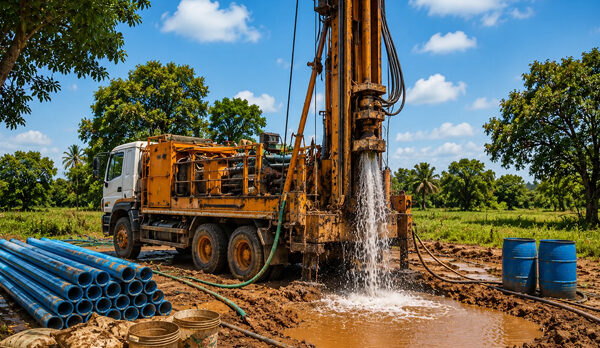
The drilling rig creates the bore according to the required diameter. Bore pipes are added as the depth increases.
During drilling, the contractor observes soil layers, rock cuttings, moisture and possible water-bearing zones. The final depth depends on local groundwater conditions and the project requirement.
6. Installing Casing Pipes
Casing pipes protect the borewell from loose soil, sand and surface contamination. The required casing length depends on the upper soil formation and borewell condition.
PVC, UPVC, mild steel or other suitable casing materials may be used according to the application.
7. Borewell Flushing and Testing
After drilling, compressed air or another suitable method is used to remove rock particles, mud and loose material from the borewell.
The water discharge is then observed to understand the approximate borewell yield. The result can change seasonally depending on groundwater availability.
8. Pump Installation
A submersible pump is selected according to:
- Borewell depth
- Water level
- Required discharge
- Delivery height
- Pipe length
- Bore diameter
- Daily operating hours
Using an oversized or undersized pump can increase electricity use and cause performance problems.
Factors Affecting Borewell Cost
Drilling Depth
A deeper borewell requires more drilling time, fuel, labour and bore pipes. Some contractors also use different rate slabs as the depth increases.
Soil and Rock Formation
Soft soil may require more casing, while very hard rock can increase drilling time and equipment wear.
Borewell Diameter
A larger bore diameter requires bigger drilling tools and machinery, which increases the cost.
Casing Length
Loose soil, sand and unstable formations may require longer casing pipes. The material and diameter of the casing also affect the cost.
Site Location
Transportation charges may increase when the site is far from the contractor’s operating area or has difficult access.
Water Availability
The drilling may need to continue deeper when suitable groundwater is not found at the expected level.
Pump and Accessories
The final cost can include a submersible pump, column pipes, electrical cables, control panel, valves and installation labour.
Costs to Confirm Before Starting
Ask the contractor whether the quotation includes:
- Drilling charge per foot
- Different depth-wise rate slabs
- Casing pipe and installation
- Rig transportation
- Air compressor charges
- Flushing and cleaning
- Pump installation
- Pipe and cable costs
- Labour charges
- Charges for unsuccessful drilling
A written quotation helps avoid confusion after the work starts.
Permissions and Safety Requirements
Groundwater extraction rules can differ according to the property type, location and intended use. The Central Ground Water Authority regulates groundwater development through NOCs for specified industries and infrastructure projects. Property owners should check applicable central, state and local requirements before drilling.
Unused and incomplete borewells should be properly sealed and protected. A CGWA public notice also stresses advance reporting and safety measures before borewell or tubewell construction to prevent accidents.
How to Choose a Borewell Contractor
Choose a contractor who provides:
- Proper site inspection
- Suitable drilling machinery
- Clear per-foot charges
- Casing recommendations
- Experienced operators
- Safe drilling practices
- Pump-selection support
- Borewell cleaning and maintenance
- Transparent project communication
Avoid selecting a contractor only on the lowest per-foot rate. Poor casing, unsuitable equipment or improper drilling can create higher repair costs later.
Conclusion
The cost of borewell drilling in India depends on depth, bore diameter, geological conditions, casing and pump requirements. A proper survey, transparent quotation and experienced drilling team can help improve project planning.
Jaldhara Borewell provides professional borewell drilling and groundwater solutions for residential, agricultural, commercial and industrial applications. Each project is planned according to the site condition and actual water requirement.
Frequently Asked Questions
How much does borewell drilling cost per foot in India?
Indicative rates may range from around ₹80 to ₹300 or more per foot depending on bore diameter, ground formation and location.
What is the normal depth of a borewell?
There is no fixed depth. It depends on local groundwater levels and underground geological formations.
Is groundwater survey compulsory?
It may not be compulsory for every project, but it can support better site selection and drilling planning.
Is casing included in the drilling rate?
Usually, casing is charged separately. Confirm this in the contractor’s written quotation.
Can a contractor guarantee water?
No contractor can guarantee a specific groundwater quantity because underground conditions vary between locations.
Which pump is suitable for a borewell?
Pump selection depends on bore depth, water level, discharge requirement and total delivery height.
we denounce with righteous indignation and dislike men who are so beguiled and demoralized by the charms of pleasure of the moment.
Denounce with righteous indignation and dislike men who are so beguiled and demoralized by the charms of pleasure of the moment.